

Navigating public transit with a service dog can feel overwhelming, but federal law provides clear protections for handlers using buses, trains, and subway systems. Under the Americans with Disabilities Act (ADA) and Department of Transportation (DOT) regulations, public transit agencies must accommodate service dogs without charging extra fees or imposing unnecessary restrictions.
Whether you're commuting to work during rush hour or traveling across town for medical appointments, understanding your rights ensures smooth, lawful access to public transportation. This comprehensive guide covers everything from boarding procedures to complaint processes, helping service dog handlers confidently use public transit systems nationwide.
Federal Laws Governing Service Dogs on Public Transit
The ADA Title II governs public transit accessibility, while DOT regulations under 49 CFR Part 37 provide specific requirements for transportation providers. These laws work together to ensure service dog handlers receive equal access to public transportation services.
Under federal law, public transit agencies must allow service dogs to accompany their handlers on all vehicles and in all facilities. This includes city buses, light rail systems, subway trains, commuter rail, and paratransit services. Transit agencies cannot charge additional fees, require advance notice, or limit service dogs to specific areas of vehicles.
Service dogs are defined as dogs individually trained to perform tasks directly related to a person's disability. This excludes emotional support animals, therapy dogs, and pets from public transit protections. Only dogs (and in limited cases, miniature horses) qualify as service animals under federal transportation law.
Transit agencies must train their employees to recognize service dog rights and respond appropriately to access requests. Drivers and station personnel cannot ask about the handler's disability, request medical documentation, or demand proof of the dog's training certification.
Boarding Procedures and Driver Obligations
Bus drivers and transit personnel have specific obligations when service dog handlers board vehicles. They must allow the handler and service dog to board together without questioning the dog's status, beyond asking if the animal is a service dog and what task it performs.
Drivers cannot require handlers to move to specific seats or areas of the bus. If priority seating is available, handlers may use these areas, but they're not restricted to them. The handler chooses the most appropriate seating location based on their needs and the dog's size.
Some transit systems use low-floor buses or wheelchair lifts. Drivers must operate these accessibility features for any passenger who needs them, including service dog handlers who may have mobility limitations. The service dog can remain with the handler throughout the boarding process.
Transit personnel cannot touch, pet, or interact with the service dog without explicit permission. They should direct all communication to the handler, not the dog. This maintains the working relationship between the service dog and handler while preventing distractions.
Where Service Dogs Can Sit and Stand
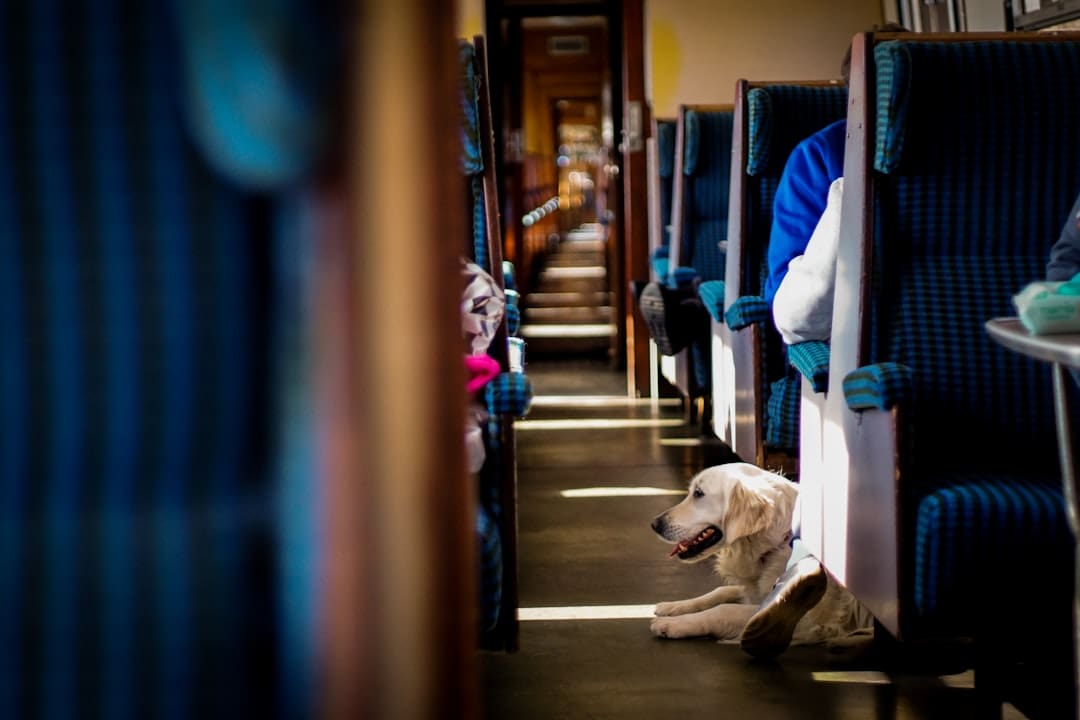
Service dogs must stay close to their handlers but don't require separate seats. The dog typically lies on the floor next to the handler's seat, in the aisle space, or across the handler's feet. Larger service dogs may need additional floor space, which other passengers must accommodate.
On buses, service dogs commonly position themselves in the aisle next to priority seating areas. These spaces often provide more room for larger dogs. The dog cannot block emergency exits, wheelchair spaces (unless the handler uses a wheelchair), or create safety hazards.
Subway and train systems offer more flexibility for service dog positioning. Handlers can choose seats that provide adequate floor space for their dog. During crowded conditions, other passengers should make reasonable efforts to provide space for the service dog team.
The service dog should never occupy a seat unless the handler has a disability that requires the dog to be elevated (such as medical alert tasks). Most service dogs are trained to lie down and stay calm during transit, minimizing their space requirements.
Rush Hour and Peak Time Considerations
Rush hour presents unique challenges for service dog handlers, but federal protections remain in full effect during peak travel times. Transit agencies cannot restrict service dog access during busy periods or require handlers to wait for less crowded vehicles.
During crowded conditions, other passengers have a responsibility to make reasonable space for service dog teams. This might mean stepping aside during boarding, avoiding the service dog's working area, or adjusting position to provide floor space.
Some handlers find traveling slightly before or after peak rush hour more comfortable, but this should be a personal choice, not a requirement. Transit agencies must ensure service dog teams can board available vehicles regardless of crowding levels.
Express buses and limited-stop services must also accommodate service dogs. Handlers cannot be directed to local or slower services simply because their service dog needs space. All service levels must remain equally accessible.
Fare Policies and Documentation Requirements
Transit agencies cannot charge fares for service dogs. Only the handler pays the standard passenger fare. This applies to all public transit services, including buses, trains, subways, and paratransit systems.
Handlers are not required to carry identification cards, certificates, or documentation proving their dog's service animal status. While some handlers obtain documentation through healthcare providers, federal law doesn't require these credentials for public transit access.
Some transit systems offer reduced-fare programs for people with disabilities. Service dog handlers may qualify for these programs based on their disability status, but the service dog's presence alone doesn't automatically qualify someone for reduced fares.
Smart cards and electronic fare systems must work the same way for service dog handlers. Transit agencies cannot require special cards or separate payment processes for handlers with service dogs.
Common Challenges and Solutions
Despite clear federal protections, service dog handlers sometimes face challenges on public transit. Driver education gaps, passenger complaints, and system policies that conflict with ADA requirements create barriers that handlers must navigate.
When drivers question service dog access, handlers should calmly state their rights under federal law. They can mention the ADA and DOT regulations but shouldn't feel obligated to provide extensive legal explanations. If the driver persists, handlers can request to speak with a supervisor or transit authority representative.
Other passengers occasionally complain about service dogs, citing allergies, fears, or space concerns. Transit personnel must support the service dog handler's legal rights while addressing other passengers' concerns respectfully. The service dog team has priority access rights under federal law.
Some transit systems have outdated policies that conflict with current ADA requirements. Understanding your public access rights helps handlers identify when policies violate federal protections and need updating.
Filing Complaints for Transit Violations
When public transit agencies violate service dog access rights, handlers have several complaint options. The DOT's Federal Transit Administration (FTA) investigates ADA violations by transit systems receiving federal funding, which includes most public transit agencies.
Handlers should document violations by recording the date, time, vehicle number, driver name (if available), and specific details of the incident. Photos or videos can support complaints, but handlers should prioritize their safety and avoid confrontational documentation.
Transit agencies must have internal complaint procedures for ADA violations. Handlers can file complaints with the transit authority's customer service department or ADA coordinator. These internal processes often resolve issues more quickly than federal complaints.
For serious or repeated violations, handlers can file complaints with the DOT's FTA Office of Civil Rights. The agency investigates discrimination complaints and can require transit systems to change policies, provide training, or face funding consequences.
Handler Responsibilities and Best Practices
While federal law provides strong protections, service dog handlers have responsibilities that help ensure smooth public transit experiences. Maintaining control of the service dog, following basic transit rules, and being prepared for questions create positive interactions.
Service dogs must be under the handler's control at all times during transit. This means the dog should respond to commands, stay in position, and not disturb other passengers. Well-trained service dogs make transit experiences better for everyone involved.
Handlers should clean up after their service dogs if accidents occur. While rare for properly trained service dogs, handlers should carry cleanup supplies and address any issues promptly and courteously.
Understanding peak travel times, alternative routes, and system layouts helps handlers plan successful trips. While they have full access rights, advance planning can make public transit easier and less stressful.
As a 501(c)(3) nonprofit healthcare provider, TheraPetic® Healthcare Provider Group supports individuals navigating service dog access rights across all public accommodations. Our mission includes ensuring people with disabilities receive equal access to essential services like public transportation.
Public transit systems serve millions of Americans daily, and service dog handlers deserve the same convenient, accessible transportation options as everyone else. Federal protections under the ADA and DOT regulations provide clear rights, but handlers must understand and advocate for these protections to ensure effective access.
From boarding procedures to complaint processes, knowing your rights creates confidence when using buses, trains, and subway systems. Service dogs perform essential tasks that help their handlers navigate daily life, and public transit access supports independence, employment, and community participation.
If you're considering a service dog or need support understanding your access rights, TheraPetic® offers comprehensive screening and evaluation services to help determine if a service dog could benefit your situation. Our Licensed Clinical Doctors provide expert guidance on service dog candidacy and access rights education.
Written By
Ryan Gaughan, BA, CSDT #6202 — executive Director
TheraPetic®® healthcare Provider Group • About • LinkedIn • ryanjgaughan.com
Clinically Reviewed By
Dr. Patrick Fisher, PhD, NCC, BC-TMH, C-AAIS — founder & clinical Director • the Service Animal Expert™